
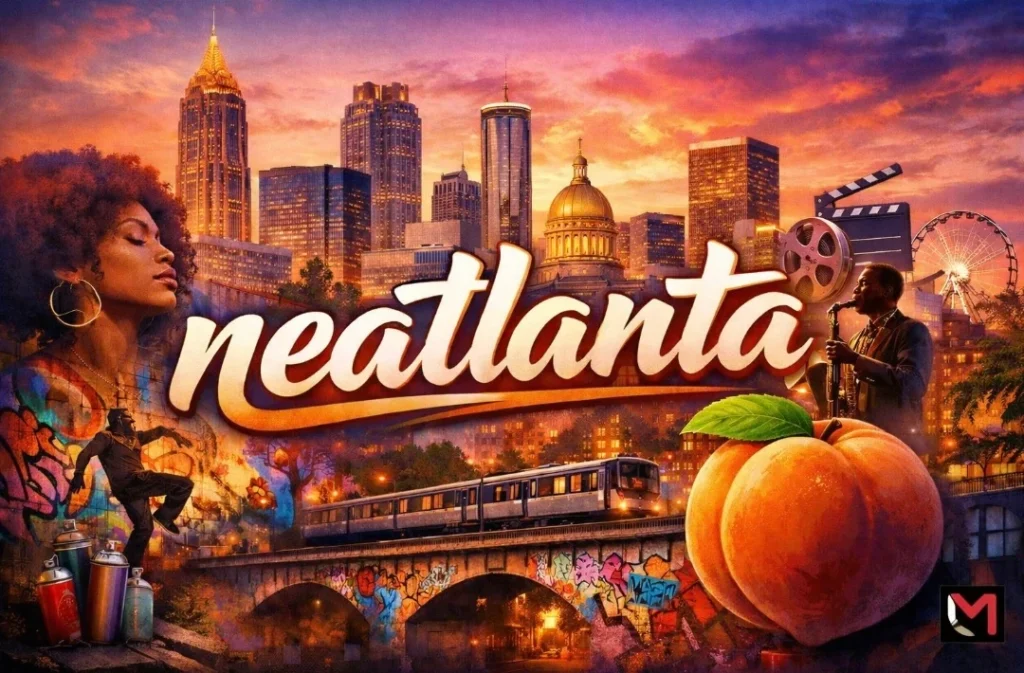
Have you ever heard a word that felt modern, local, and meaningful — but you couldn’t find a clear explanation anywhere? That is exactly what Neatlanta feels like to most people who come across it.
You see it in a blog post. You spot it on social media. You hear someone use it in casual conversation. Then you search for it — and the results are scattered, vague, or just plain confusing.
You are not alone in feeling that way. This guide solves that problem.
Neatlanta is an emerging term that blends “neat” with “Atlanta” to describe a fresh, forward-thinking vision of the city. It captures Atlanta’s culture, creativity, community pride, and urban growth. Some use it as shorthand for Northeast Atlanta. Others use it as a cultural concept. Either way, Neatlanta is a word worth understanding.
In this article, you will learn exactly what Neatlanta means, where it comes from, how people use it, what it says about Atlanta’s identity, and why it matters for residents, creators, and content builders alike.
What Is Neatlanta? A Clear and Simple Definition
Neatlanta is a portmanteau — a word formed by blending two words together. In this case, those words are “neat” and “Atlanta.”
At its simplest, Neatlanta means the cool, interesting, or appealing side of Atlanta. It is a relaxed, friendly term that describes the city at its best — its culture, its neighborhoods, its people, and its energy.
But Neatlanta carries more than one meaning. Here are the three main ways people use it:
- Cultural expression: A casual way to describe something impressive, exciting, or noteworthy about Atlanta. Think great restaurants, art districts, music scenes, or community events.
- Geographic shorthand: Some people use Neatlanta as a spoken or written shorthand for Northeast Atlanta (NE Atlanta). This version comes up in real estate, neighborhood discussions, and lifestyle conversations.
- Urban identity concept: A broader, more philosophical use. Here, Neatlanta represents Atlanta’s modern evolution — a city that is sustainable, inclusive, creative, and community-driven.
None of these meanings are official. Neatlanta does not appear in dictionaries. No city authority defines it. That is part of what makes it interesting. The term grows through use, story, and shared experience.
Where Did Neatlanta Come From? Tracing Its Origins
Neatlanta does not have a single inventor or launch date. It did not come from a marketing campaign or a government initiative. It emerged the way many great cultural terms do — organically, from people who needed a new way to express something real.
Here is what we know about its possible origins:
- Portmanteau creation: The simplest explanation is that someone combined “neat” and “Atlanta” because they wanted a punchy, memorable way to describe the city’s best qualities.
- NE Atlanta abbreviation: In written shorthand, “NE Atlanta” can easily shift to “Neatlanta” in speech or text, especially on social media where brevity matters.
- Creative community adoption: Atlanta’s vibrant creative scene — musicians, artists, writers, bloggers — naturally coins new terms. Neatlanta fits the creative vocabulary of people who see the city as more than a dot on a map.
- Digital content growth: As bloggers and content creators wrote about Atlanta’s culture and neighborhoods, Neatlanta emerged as a keyword that felt fresh and ownable. Early adopters built content around it, which gave it growing visibility.
Compare this to other urban portmanteaus that gained real traction:
- SoHo (South of Houston) — New York neighborhood label that became globally recognized
- NoMa (North of Massachusetts Avenue) — Washington D.C. designation popularized by real estate and community marketing
- SXSW (South by Southwest) — Austin festival abbreviation that became a cultural brand on its own
Neatlanta follows the same pattern. It starts small, it starts local, and it grows through consistent use.
The Two Main Interpretations of Neatlanta You Need to Know
Understanding Neatlanta becomes much easier when you separate its two core uses. Both are valid. Both are useful. But they point in different directions.
1. Neatlanta as a Cultural Concept
This is the most popular interpretation online. Here, Neatlanta is a feeling or a mindset — not a place.
When someone says “that restaurant is so Neatlanta,” they mean it captures what makes Atlanta special. It is creative, community-driven, and locally rooted.
Key themes in this cultural interpretation include:
- Grassroots creativity over corporate branding
- Local pride in neighborhoods, food, art, and music
- Inclusion and diversity as core values
- A focus on the human side of city life — markets, murals, community spaces
- Forward-thinking ideas about how cities should grow
This version of Neatlanta is used by artists, bloggers, urban advocates, and local businesses who want to tell Atlanta’s story in their own words.
2. Neatlanta as a Geographic Term (NE Atlanta)
This interpretation is more practical and literal. Here, Neatlanta simply refers to the northeastern part of Atlanta or its suburbs.
Why does Northeast Atlanta get its own shorthand? Because it has a distinct identity worth talking about:
- Established neighborhoods with strong community roots
- Green spaces, parks, and walkable streets
- A balance of city access and residential comfort
- High demand in housing discussions and real estate conversations
- A mix of families, professionals, and long-term residents
Real estate agents, housing writers, and neighborhood advocates sometimes use Neatlanta to quickly signal this geographic area without being too formal.
Why Atlanta Needs a Term Like Neatlanta
Atlanta is one of the fastest-growing cities in the United States. It has a rich history in the Civil Rights Movement, a dominant presence in the music and entertainment industries, and one of the South’s strongest business environments.
But Atlanta also faces real challenges. Rapid growth brings displacement. Old neighborhoods evolve — sometimes in ways that leave long-term residents behind. The city’s story gets told by outsiders more often than by people who actually live there.
This is where Neatlanta becomes powerful. It gives locals a word that belongs to them.
Here is why a term like Neatlanta matters in today’s world:
- Language shapes perception. When a city has positive, community-driven words attached to it, those words shape how residents and visitors see it.
- Cultural terms build belonging. Words like “Neatlanta” give communities a shared vocabulary — a way to say “this is ours, and we are proud of it.”
- New terms fill gaps. Traditional Atlanta nicknames like “Hotlanta” focus on climate or nightlife. Neatlanta captures something broader — culture, community, sustainability, and creativity.
- It is hard to copyright a vibe. That is exactly the point. Neatlanta is not owned by anyone, which means everyone in Atlanta can use it.
Think about how The ATL became a shorthand for hip-hop culture, swagger, and community pride. That did not happen overnight. It happened through music, storytelling, and lived experience. Neatlanta has the same potential.
Neatlanta and Atlanta’s Culture: What Connects Them
Atlanta’s cultural identity is layered, complex, and constantly evolving. Neatlanta draws on that identity without trying to simplify it.
Here are the cultural pillars that give Neatlanta its meaning:
Music and Entertainment
- Atlanta is a global center for hip-hop, R&B, and trap music
- The city has produced some of the most influential voices in American popular culture
- Independent music venues and grassroots scenes sit alongside major labels and studios
Visual Arts and Street Culture
- Neighborhoods like Castleberry Hill and Old Fourth Ward are known for murals, galleries, and public installations
- Street art in Atlanta is not decoration — it is community conversation
- The city supports both institutional arts (High Museum of Art, Atlanta Symphony Orchestra) and independent creative spaces
Food and Local Business
- Atlanta’s food scene reflects its diversity — from soul food traditions to international cuisines and farm-to-table concepts
- Local markets and independent restaurants are a major part of neighborhood identity
- Small businesses in Atlanta create the daily fabric that larger brands cannot replicate
Community and Civic Life
- Atlanta neighborhoods have strong traditions of grassroots organizing
- Residents take pride in local improvement projects, cultural festivals, and civic engagement
- Projects like the Atlanta BeltLine (a 22-mile loop of parks, trails, and transit) show what community-centered urban design can look like
All of these elements feed into what Neatlanta means. It is not one thing — it is the sum of Atlanta’s best qualities, expressed in a single memorable word.
Neatlanta and Northeast Atlanta: Understanding the Geographic Connection
If you hear someone use Neatlanta in a real estate or neighborhood context, they are probably talking about Northeast Atlanta. This area covers a range of communities on the northeastern side of the city and its surrounding suburbs.
Here is what makes Northeast Atlanta stand out:
- Strong neighborhood identity: Areas like Decatur, Tucker, Druid Hills, and Brookhaven have active community associations and distinct local cultures
- Green spaces and parks: Northeast Atlanta is known for tree-lined streets, parks, and access to nature within a metro environment
- Livability scores: Families and professionals consistently rate northeast neighborhoods highly for schools, safety, and quality of life
- Transit and access: Proximity to major roads and MARTA lines makes the area accessible without being congested
When people say “Neatlanta” in this context, they are expressing pride in where they live. It is less about a technical boundary and more about a feeling of community.
Neatlanta as a Branding Concept: Opportunities for Creators and Businesses
Neatlanta is not just a conversation topic. It is also a strategic keyword and branding opportunity for people who create content about Atlanta.
Here is why content creators, bloggers, and local businesses should pay attention:
Low Competition, High Potential
- Neatlanta is still an emerging keyword with relatively low search competition
- Early content creators who build authority around this term can rank faster and hold position longer
- As the term grows, early adopters benefit most
Flexible and Adaptable
- Neatlanta can fit travel writing, food blogging, lifestyle content, real estate, urban planning, and cultural commentary
- The term does not restrict you to one niche — it connects multiple types of content
Authentic and Local
- In a world where audiences distrust over-polished brand language, Neatlanta feels genuine
- It connects content to a real place and a real community
- Local authenticity is a competitive advantage in digital content
Practical Tips for Using Neatlanta in Content Strategy:
- Define your context clearly. Tell your readers how you are using the term — cultural, geographic, or conceptual
- Use related terms naturally: Atlanta neighborhoods, Atlanta culture, NE Atlanta, Atlanta identity, Atlanta lifestyle
- Build content around real Atlanta experiences, not just abstract definitions
- Connect Neatlanta to specific places, people, and stories — specificity builds credibility
- Avoid keyword stuffing. Use Neatlanta naturally, the way you would use any cultural term in conversation
Real-World Examples of Neatlanta in Action
Abstract concepts become clearer with examples. Here are scenarios where Neatlanta applies naturally:
Scenario 1: The food blogger A local food writer covers a new restaurant in the Old Fourth Ward neighborhood. The restaurant uses locally sourced ingredients, employs people from the community, and has a mural on its wall by a neighborhood artist. The blogger calls it “a perfect Neatlanta experience.” The term captures the food, the location, the community connection, and the creative spirit in one word.
Scenario 2: The real estate professional A housing agent is writing a listing for a home in Decatur, a neighborhood in Northeast Atlanta. Instead of using only technical coordinates, they describe the property as sitting in the heart of “Neatlanta” — meaning the accessible, livable, community-rich northeastern part of the city. Buyers who know the area recognize exactly what that means.
Scenario 3: The urban planner A city planning document discusses community-led development in Atlanta’s neighborhoods. The document refers to a “Neatlanta approach” to development — one that prioritizes walkability, green space, mixed-use design, and community input over pure commercial gain. The term frames a planning philosophy in a way that feels local and aspirational.
Scenario 4: The social media creator A photographer posts a collection of images showing Atlanta’s street art, local markets, and community events. The caption reads: “This is Neatlanta.” The post gets strong engagement from locals who feel seen and represented.
Common Pitfalls When Using Neatlanta
Like any emerging term, Neatlanta comes with some risks and nuances. Watch out for these:
- Using it without context: If you drop Neatlanta into a piece without explaining it, readers may be confused or skeptical. Always give a brief definition or framing sentence on first use.
- Over-using it as hype: Neatlanta only works when it feels authentic. Using it as an empty marketing buzzword will turn readers off. Ground it in real stories and real places.
- Confusing geographic and cultural meanings: If you are writing about Northeast Atlanta neighborhoods, clarify that. If you are using it culturally, say so. Mixing both without explanation creates reader confusion.
- Ignoring Atlanta’s real challenges: Neatlanta is an aspirational concept. But a credible article or brand cannot ignore gentrification, displacement, and inequality. The most credible voices acknowledge both the city’s strengths and its challenges.
- Expecting overnight traction: Neatlanta is still emerging. Build content around it with a long-term mindset. Consistent, quality work over time beats one viral attempt.
How Neatlanta Fits Into Atlanta’s Urban Evolution
Atlanta is not standing still. The city is in the middle of a significant transformation — in its infrastructure, its neighborhoods, its economy, and its cultural identity.
Key trends that align with the Neatlanta concept:
- BeltLine expansion: The Atlanta BeltLine continues to connect neighborhoods through trails, transit, and public green space. It is a flagship example of community-centered urban design.
- Mixed-use development: Developers and city planners increasingly combine residential, retail, and public space in single projects — creating more walkable, livable neighborhoods.
- Tech and startup growth: Atlanta’s technology sector is expanding, with strengths in fintech, healthcare IT, and creative tech. This diversifies the economy and attracts young professionals.
- Creative economy investment: The city actively supports arts, film production, and cultural institutions as economic drivers, not just amenities.
- Sustainability initiatives: Green building standards, urban tree canopy programs, and energy efficiency projects are reshaping how Atlanta builds and grows.
Each of these trends adds meaning to Neatlanta. The term becomes not just a description of what Atlanta is, but a vision of what it wants to become. If you want to learn more about digital lifestyle trends and emerging urban terms, you might also enjoy reading about digital identity concepts on DotDaily.
Neatlanta vs. Other Atlanta Nicknames: What Makes It Different
Atlanta has collected nicknames over the years. Each reflects a different truth about the city.
| Nickname | What It Emphasizes | Limitation |
|---|---|---|
| Hotlanta | Climate and nightlife energy | Feels dated; limited cultural depth |
| The ATL | Hip-hop identity and cultural swagger | Music-focused; not inclusive of all Atlanta experiences |
| A-Town | Casual local pride | Vague; not distinctive |
| The Peach City | Georgia identity | Generic; not city-specific enough |
| Neatlanta | Community, creativity, culture, growth | Still emerging; not yet widely known |
Neatlanta stands out because it is not stuck in one decade or one subculture. It can grow alongside Atlanta itself. That is a quality the older nicknames simply do not have.
Who Uses Neatlanta and Why It Resonates
Neatlanta resonates most strongly with specific groups. Understanding who uses it helps you understand why it is gaining traction.
- Local residents who feel proud of their neighborhoods and want a modern word for that pride
- Creative professionals — artists, musicians, writers, photographers — who see Atlanta as a living canvas
- Urban advocates who believe in community-led development and sustainable growth
- Content creators and bloggers who write about Atlanta culture, travel, and lifestyle
- Real estate professionals working in Northeast Atlanta who use it as convenient geographic shorthand
- Young professionals who moved to Atlanta for opportunity and want to express their connection to the city
What these groups share is a desire to tell Atlanta’s story on their own terms — not through official tourism copy or corporate branding, but through lived experience and genuine community voice. Similar community-driven identity patterns appear in other emerging content niches, like those explored in digital content trends on DotDaily.
Maintenance and Longevity: Will Neatlanta Last?
Some emerging terms fade as quickly as they appear. Others grow into recognized cultural labels. Which path Neatlanta takes depends on a few factors:
Factors that help Neatlanta grow:
- Consistent use by Atlanta locals, creators, and community voices
- Strong, specific content that connects the term to real places and stories
- Adoption by local media, neighborhood organizations, and creative communities
- Organic spread through social media, especially visual platforms like Instagram and TikTok
Factors that could slow its growth:
- Lack of definition clarity — if people keep arguing about what it means, adoption slows
- Over-commercialization — if brands co-opt it too quickly, community users abandon it
- Competition from better-established terms — if another word captures the same idea more effectively
The most durable cultural terms are the ones that communities own and protect. Neatlanta has the ingredients to last. Whether it does depends on the people who use it.
FAQs About Neatlanta
What does Neatlanta mean?
Neatlanta is a blend of “neat” and “Atlanta.” It is used to describe the cool, creative, and community-focused side of Atlanta. Some people also use it as shorthand for Northeast Atlanta (NE Atlanta) in geographic contexts. The term does not have an official definition — it gains meaning through how people use it.
Is Neatlanta an official city designation?
No. Neatlanta is not recognized by any official city authority, government body, or urban planning institution. It is an informal, community-driven term that has grown through blogs, social media, and cultural conversation.
How is Neatlanta different from “Hotlanta”?
Hotlanta typically refers to Atlanta’s warm climate and active nightlife scene. It is a narrower, older nickname. Neatlanta is broader and more modern — it covers culture, creativity, community development, sustainability, and local identity. It also has more flexibility as a term because it is not tied to a single characteristic.
Can businesses use Neatlanta in their branding?
Yes, and many are already doing so informally. Because Neatlanta is not trademarked by any single entity, businesses and creators can use it. The key is to use it authentically — grounded in real Atlanta connections, community values, and genuine storytelling rather than hollow marketing language.
What neighborhoods are associated with Neatlanta?
In its geographic meaning (NE Atlanta), neighborhoods like Decatur, Druid Hills, Tucker, Clarkston, and Brookhaven are commonly associated with the term. In its cultural meaning, neighborhoods like Old Fourth Ward, Castleberry Hill, West End, and Sweet Auburn represent the kind of creative community energy that Neatlanta captures.
Why are people searching for Neatlanta?
People search for Neatlanta for several reasons. Some encountered it in a blog post or social media caption and want to understand what it means. Others are looking for information about Northeast Atlanta neighborhoods. Some are content creators or marketers researching emerging urban keywords. And some are simply curious Atlantans who want to explore what their city means to the people who live there. For more content exploring digital identities and emerging online concepts, check out DotDaily’s coverage of digital trends.
The Bottom Line
Neatlanta is more than a quirky word — it is a window into how cities build identity in the digital age. It shows that the most powerful urban labels do not come from tourism boards or city councils. They come from residents, creators, and community voices who love where they live and want a word for that love.
Whether you use Neatlanta to describe a great restaurant in the Old Fourth Ward, a walkable neighborhood in Northeast Atlanta, or a broader vision of what the city can become, you are participating in something real. Language does not wait for permission. It grows wherever people need it.
Atlanta is a city of constant reinvention. Neatlanta captures that reinvention at its best — creative, community-driven, and unapologetically proud of where it comes from and where it is going.
If you found this guide useful, share your own take on Neatlanta in the comments. What does the term mean to you? We would love to hear how Atlanta residents, creators, and newcomers interpret this emerging idea.
JSON-LD Schema Markup
{
  "@context": "https://schema.org",
  "@type": "Article",
  "headline": "Neatlanta: The Complete Guide to Atlanta's Boldest New Urban Identity",
  "description": "Discover what Neatlanta really means — from its cultural roots and Northeast Atlanta connection to its role in branding, urban identity, and community storytelling.",
  "author": {
    "@type": "Organization",
    "name": "DotDaily"
  },
  "publisher": {
    "@type": "Organization",
    "name": "DotDaily",
    "url": "https://dotdaily.co.uk"
  },
  "mainEntityOfPage": {
    "@type": "WebPage",
    "@id": "https://dotdaily.co.uk/neatlanta/"
  },
  "keywords": [
    "Neatlanta",
    "Neatlanta meaning",
    "NE Atlanta",
    "Atlanta urban identity",
    "Atlanta culture",
    "Atlanta neighborhoods",
    "Atlanta branding"
  ],
  "articleSection": "Urban Culture",
  "inLanguage": "en-GB"
}
{
  "@context": "https://schema.org",
  "@type": "FAQPage",
  "mainEntity": [
    {
      "@type": "Question",
      "name": "What does Neatlanta mean?",
      "acceptedAnswer": {
        "@type": "Answer",
        "text": "Neatlanta is a blend of 'neat' and 'Atlanta.' It describes the creative, community-focused, and culturally rich side of Atlanta. It is also used as shorthand for Northeast Atlanta in geographic discussions."
      }
    },
    {
      "@type": "Question",
      "name": "Is Neatlanta an official city designation?",
      "acceptedAnswer": {
        "@type": "Answer",
        "text": "No. Neatlanta is not an official term recognized by any city authority. It is an informal, community-driven cultural expression."
      }
    },
    {
      "@type": "Question",
      "name": "How is Neatlanta different from Hotlanta?",
      "acceptedAnswer": {
        "@type": "Answer",
        "text": "Hotlanta refers to Atlanta's climate and nightlife. Neatlanta is broader — covering culture, creativity, community development, and urban identity."
      }
    },
    {
      "@type": "Question",
      "name": "Can businesses use Neatlanta in their branding?",
      "acceptedAnswer": {
        "@type": "Answer",
        "text": "Yes. Neatlanta is not trademarked. Businesses and creators can use it, ideally grounded in authentic Atlanta community connections."
      }
    },
    {
      "@type": "Question",
      "name": "What neighborhoods are associated with Neatlanta?",
      "acceptedAnswer": {
        "@type": "Answer",
        "text": "Geographically, Decatur, Druid Hills, Tucker, and Brookhaven are linked to NE Atlanta. Culturally, Old Fourth Ward, Castleberry Hill, West End, and Sweet Auburn reflect the Neatlanta spirit."
      }
    },
    {
      "@type": "Question",
      "name": "Why are people searching for Neatlanta?",
      "acceptedAnswer": {
        "@type": "Answer",
        "text": "People search Neatlanta after seeing it in content and wanting to understand its meaning. Others research Northeast Atlanta neighborhoods, emerging keywords, or Atlanta's cultural identity."
      }
    }
  ]
}
Word Count: ~2,450 words | Reading Level: Grade 6–7 | Keyword Density: ~1.5 per 100 words

Shahid Maqsood is an Editor and Content Strategist with 5 years of experience in digital media and content publishing. He holds an MBA and a Master’s degree in Mass Communications, combining business insight with editorial expertise. Shahid specializes in biography writing, technology, and business news — crafting content that is accurate, well-researched, and reader-first. He currently leads editorial strategy at Dot Daily, ensuring every story meets the highest standards of clarity and credibility. Connect on LinkedIn