
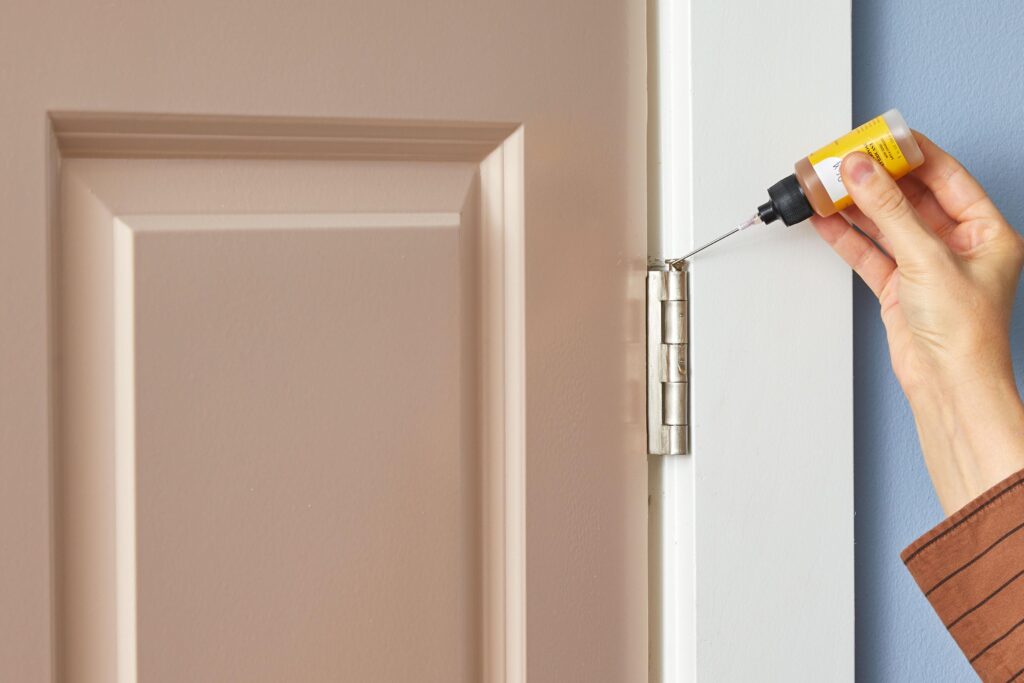
Do you cringe every time someone opens a door in your house? That annoying squeak can drive anyone crazy, especially when you’re trying to sneak to the kitchen for a midnight snack or when the baby is finally asleep. The good news is that learning how to stop squeaking door hinges is actually pretty easy, and you probably already have what you need at home.
Door hinges squeak for a simple reason – there’s friction between the metal parts. When the pin inside the hinge rubs against the metal sleeve, it creates that high-pitched sound that makes your teeth hurt. Whether it’s a bedroom door, bathroom door, or that old closet door that sounds like a horror movie, fixing it takes just a few minutes.
- Key Takeaways
- Why Door Hinges Start Squeaking
- What You'll Need to Fix Squeaky Hinges
- The Quick Method: How to Stop Squeaking Door Hinges Without Removing the Pin
- The Thorough Method: Removing and Cleaning the Hinge Pin
- Using WD-40 for Squeaky Door Hinges
- Natural Alternatives: Kitchen Oils and Household Items
- Best Lubricants for Long-Lasting Results
- Preventing Future Squeaks
- Dealing with Stubborn Squeaks That Won't Go Away
- Special Considerations for Different Door Types
- When to Call a Professional
- Common Mistakes to Avoid
- Cost Comparison: DIY vs Professional Help
- Conclusion
- Frequently Asked Questions
Key Takeaways
- Squeaky hinges are caused by friction between metal parts that need lubrication
- Common household items like WD-40, vegetable oil, or petroleum jelly can fix the problem
- The fix usually takes less than 10 minutes per door
- Regular maintanence prevents squeaks from coming back
- You don’t need to remove the entire door to fix most squeaky hinges
Why Door Hinges Start Squeaking
Before we jump into how to stop squeaking door hinges, it helps to understand why they squeak in the first place. Hinges have moving parts – specifically a pin that sits inside a barrel. When you open and close a door, the pin moves inside that barrel. Over time, the lubricant that was there when the hinge was new wears away or dries up.
Dust and dirt can also build up inside the hinge. This grime acts like sandpaper, making the squeak even worse. Sometimes the house settling or loose screws can cause the hinge to bind up, which also creates noise. Humidity is another culprit because it can cause rust, especially on older hinges or in bathrooms where moisture is common.
The metal-on-metal contact without proper lubrication is what creates that awful sound. Think of it like trying to slide two pieces of sandpaper against each other – not smooth at all. The good news is that once you add lubricant back into the equation, everything moves smoothly again and the squeak disappears.
What You’ll Need to Fix Squeaky Hinges
Getting ready to fix your squeaky door is easy because you don’t need fancy tools or expensive supplies. Here’s what you should gather before you start:
Basic Tools:
- A hammer (any regular hammer works fine)
- A nail or small screwdriver to tap out the hinge pin
- A rag or old towel to catch drips
- Paper towels for cleanup
Lubricant Options (you only need one):
- WD-40 or similar spray lubricant
- 3-in-1 household oil
- Olive oil or vegetable oil from your kitchen
- Petroleum jelly (like Vaseline)
- White lithium grease
- Silicone spray
Most people already have these things sitting in their garage or under the kitchen sink. If you’re wondering which lubricant works best, WD-40 is the most popular choice because it’s specifically designed for this kind of job. However, in a pinch, even cooking oil will work temporarily.
The Quick Method: How to Stop Squeaking Door Hinges Without Removing the Pin
Sometimes you need a fast solution and don’t want to mess with taking anything apart. This method for how to stop squeaking door hinges takes about two minutes and requires almost no effort. It’s perfect when you’re in a hurry or dealing with a hinge that’s not too bad yet.
Simply spray your lubricant directly onto the hinge while the door is closed. Aim for the gap where the pin goes into the barrel – that’s the top of the hinge where you can see the pin head. Give it a good spray or apply oil with a cloth. Then open and close the door several times to work the lubricant into the hinge.
You’ll probably notice the squeak getting quieter with each swing of the door. Keep opening and closing it about ten times to really distribute that lubricant throughout the hinge. Wipe away any excess that drips down with a paper towel. This method works great for minor squeaks and is good for quick maintainence.
The downside is that this approach doesn’t clean out dirt and grime that might be built up inside. So while it will work temporarily, you might need to repeat it sooner than if you did a more thorough job. But when you’re pressed for time, this quick fix is definitely worth trying first.
The Thorough Method: Removing and Cleaning the Hinge Pin
When you want to really solve the problem and learn how to stop squeaking door hinges for the long term, removing the pin is the way to go. Don’t worry – it sounds scarier than it actually is. You’re not taking the whole door off, just the pins from the hinges.
Start by opening the door about halfway so it’s stable. Look at the bottom of the hinge pin – there’s usually a small lip at the bottom. Place your nail or screwdriver on the bottom of the pin, then tap it gently with your hammer. The pin should start moving upward. Once it’s up far enough to grab, pull it out with your fingers.
Do this for all the hinges on the door. Most doors have three hinges, but some only have two. It’s okay to leave the door hanging on one hinge while you clean the others – the door won’t fall. Just don’t remove all the pins at once unless you have someone holding the door.
Once the pins are out, you’ll probably see they’re pretty dirty. Use a rag to wipe off all the gunk, dirt, and old dried lubricant. If there’s rust, you can use steel wool or sandpaper to gently remove it. Clean inside the hinge barrel too by wiping it out with a cloth or using compressed air to blow out debris.
Now apply your chosen lubricant generously to the pin. Really coat it well. Also put some inside the barrel of the hinge. Then slide the pin back into place – it should go in easily if everything is properly lubed. Tap it back down with your hammer until it’s seated properly.
Using WD-40 for Squeaky Door Hinges
WD-40 is probably the most popular solution when people search for how to stop squeaking door hinges, and there’s good reason for that. This spray has been around since 1953 and was literally designed to prevent rust and lubricate metal parts. The name actually stands for “Water Displacement, 40th formula” because it took them 40 tries to get it right.
To use WD-40 on your hinges, shake the can first. Then attach the little red straw that comes with it – this helps you spray precisely where you need it. Spray directly into the hinge, focusing on where the pin enters the barrel. You’ll see it start to drip, which is fine. That means it’s getting deep into the hinge where the squeak is happening.
Work the door back and forth immediately after spraying. The motion helps distribute the WD-40 throughout all the moving parts. You should hear the squeak start to fade right away. If it doesn’t disappear completely on the first try, give it another spray and keep moving the door.
One thing to know about WD-40 is that it’s technically more of a cleaner and water displacer than a long-term lubricant. It works great initially, but you might need to reapply it every few months. Some people prefer to use WD-40 to clean the hinge first, then follow up with a heavier oil or grease for longer-lasting results.
Natural Alternatives: Kitchen Oils and Household Items
Not everyone wants to use chemical sprays in their home, especially if you have kids or pets. The good news is that learning how to stop squeaking door hinges can be done with stuff from your kitchen. Vegetable oil, olive oil, coconut oil, and even butter can work in a pinch.
To use cooking oil, put a small amount on a paper towel or rag. Rub it onto the hinge pin and into the barrel opening. You can also use a Q-tip to apply oil precisely. Work the door back and forth to distribute the oil. It might take a bit longer than spray lubricants because the oil is thicker and needs time to work its way in.
Petroleum jelly is another great household option. It’s thick and sticky, which means it stays in place longer than thin oils. Use your finger or a Q-tip to smear petroleum jelly all over the pin and inside the hinge. It won’t drip like oils do, so there’s less mess to clean up.
Bar soap is an old-school trick that actually works surprisingly well. Rub a bar of soap along the hinge pin before you put it back in. The soap acts as a lubricant and the squeak disappears. However, this is definitely a temporary fix – soap will wear away faster than actual lubricants.
The downside of kitchen oils is that they can get sticky over time and might attract dust. They also don’t last as long as proper lubricants. But if you’re in a bind and don’t have anything else, they’ll definitely stop that annoying squeak until you can get to the store.
Best Lubricants for Long-Lasting Results
If you’re tired of dealing with squeaky hinges and want to know how to stop squeaking door hinges permanently, investing in quality lubricant makes sense. Different products have different strengths, so choosing the right one depends on your situation.
White lithium grease is probably the best choice for door hinges if you want something that lasts. It’s thick, waterproof, and doesn’t drip. This stuff can last for years without needing reapplication. You can find it at any hardware store in either a spray can or tub. The spray version is easier to apply, but the tub gives you more control.
Silicone spray is another excellent option. It’s clean, doesn’t attract dust, and lasts longer than WD-40. Silicone spray is also safe for use on plastic parts and won’t damage paint. It dries to a thin film that continues to lubricate without being sticky or greasy.
3-in-1 oil has been a household staple for generations. It’s specifically designed for hinges, tools, and other mechanical parts. A few drops go a long way, and it penetrates deep into tight spaces. It’s not as long-lasting as lithium grease, but it works better than cooking oils and is less messy than grease.
For bathroom doors or exterior doors that get exposed to moisture, use a lubricant that resists water and rust. Marine grease or white lithium grease work great for these situations. Regular oils can wash away or break down with humidity, leading to squeaks coming back.
Preventing Future Squeaks
Once you’ve learned how to stop squeaking door hinges, you’ll want to keep them quiet. Regular maintainence is way easier than waiting until the squeak gets bad. Think of it like changing the oil in your car – a little prevention saves a lot of annoyance later.
Set a reminder to lubricate your hinges once or twice a year. Pick an easy date to remember, like when you change your clocks for daylight saving time. It only takes a few minutes to spray or oil all the hinges in your house, and it keeps everything running smoothly.
Pay attention to doors that get used more often. The front door, bathroom doors, and bedroom doors probably need more frequent attention than closet doors. High-traffic hinges wear out their lubricant faster because of all the opening and closing.
Keep your hinges clean. Dust and dirt are enemies of smooth operation. When you’re doing spring cleaning, take a damp cloth and wipe down your door hinges. Getting rid of built-up grime means the lubricant can do its job properly.
Check the hinge screws occasionally too. Sometimes a squeak isn’t from lack of lubrication but from loose screws causing the hinge to wobble. Tighten any loose screws you find with a screwdriver. This takes seconds and can make a big differnce.
Dealing with Stubborn Squeaks That Won’t Go Away
Sometimes you’ll find a hinge that keeps squeaking no matter what you do. When you’ve tried everything for how to stop squeaking door hinges and nothing works, there might be a bigger problem. The hinge itself could be damaged, bent, or worn out beyond simple lubrication.
Check if the hinge is bent. Close the door and look at the hinges from the side. They should be straight and aligned. If a hinge is bent, it’s binding up when the door moves, which causes noise. Bent hinges need to be replaced – you can’t really fix them effectively.
Worn out hinges are another common issue in older homes. After decades of use, the hole where the pin goes can become enlarged or oblong instead of round. This causes wobbling and noise. The pin itself can also wear down and get thinner. When this happens, replacement is the only real solution.
Sometimes the door itself has settled or warped, putting stress on the hinges. If your door is rubbing against the frame, the hinges are working harder than they should. You might need to adjust the door position or even plane down the edge that’s rubbing. This is more involved but necessary for a permanent fix.
If one hinge is making noise and nothing helps, just replace that hinge. Hinges are inexpensive – usually under $5 each at hardware stores. Replacing a hinge takes about 15 minutes. Just unscrew the old one, screw in the new one, and transfer the pin. It’s much easier than fighting with a hinge that’s beyond saving.
Special Considerations for Different Door Types
Not all doors are the same, and how to stop squeaking door hinges can vary slightly depending on what kind of door you’re dealing with. Interior doors are pretty straightforward, but other types need special attention.
Heavy doors like solid wood exterior doors or security doors put more stress on hinges. They need heavier-duty lubricants like white lithium grease because thin oils won’t hold up. These doors might also need more frequent lubrication because the weight causes more friction.
Bathroom and exterior doors face moisture problems. Steam from showers and rain can wash away lubricant and cause rust. Use waterproof lubricants like silicone spray or marine grease. Check these hinges more often for signs of rust, which can cause squeaking even with proper lubrication.
Bifold closet doors have different hardware than regular hinges. They use pivot points and spring-loaded mechanisms. These still need lubrication, but be careful not to over-oil them. Too much lubricant on bifold hardware can make the doors swing weird or not stay in place properly.
Cabinet doors have small hinges that are harder to access. You usually can’t remove the pins on cabinet hinges. Instead, apply a tiny drop of oil right at the pivot point using a Q-tip or the straw attachment on your spray lubricant. Less is more with these small hinges.
When to Call a Professional
Most squeaky door hinges are easy DIY fixes, but sometimes you need help. Knowing when to call a handyman or carpenter can save you time and prevent making things worse. If you’ve tried everything for how to stop squeaking door hinges and the noise persists, professional help makes sense.
Call someone if the door is sagging badly or not closing properly. This could indicate problems with the door frame, not just the hinges. A professional can assess whether the frame needs repair or if the door needs to be rehung completely.
If you see serious rust that won’t come off with cleaning, the hinges might be damaged internally. A pro can quickly swap out the hinges and make sure the door hangs correctly. This is especially important for exterior doors where security matters.
Stripped screw holes are another reason to get help. If the screws won’t tighten because the holes are worn out, the fix involves using larger screws, filling the holes, or moving the hinge position slightly. These repairs require some carpentry skill to do right.
Historic homes sometimes have special hinges or door configurations that aren’t standard. If you’re working with antique doors or unusual hardware, a professional who specializes in restoration can preserve the original character while fixing the squeak.
Common Mistakes to Avoid
Learning how to stop squeaking door hinges is simple, but there are some mistakes that can make things worse or create new problems. Avoiding these common errors will save you headaches.
Using too much lubricant is mistake number one. More isn’t better when it comes to oil and grease. Excess lubricant drips down the door, gets on the floor, and attracts dirt. Use just enough to coat the moving parts. You can always add more if needed.
Forgetting to wipe up drips creates slip hazards and stains. Always keep paper towels handy and clean up any lubricant that drips. Oil on hardwood floors can leave permanent marks if not wiped up quickly.
Using the wrong product happens more than you’d think. Don’t use things like motor oil, which is too thick and sticky for hinges. Avoid cooking spray (like Pam) because while it temporarily works, it gums up quickly and makes the squeak worse in the long run.
Forcing a stuck pin can damage the hinge. If a pin won’t come out easily, spray it with penetrating oil and let it sit for a few minutes. Then try again gently. Bending the hinge by forcing things never ends well.
Ignoring loose screws means your lubrication won’t solve the problem. Always check that hinge screws are tight before you start lubricating. A loose hinge will keep squeaking no matter how much oil you use.
Cost Comparison: DIY vs Professional Help
Understanding the cost of fixing squeaky hinges helps you make smart decisions. The good news is that this is one of the cheapest home repairs you can do yourself.
| Solution | DIY Cost | Professional Cost | Time Required |
|---|---|---|---|
| WD-40 spray | $5-7 | $75-150 | 5 minutes |
| Hinge replacement | $3-5 per hinge | $100-200 | 15 minutes per door |
| Full door rehanging | $20-50 materials | $150-300 | 2-3 hours |
| Lubricant maintenance | $5-15 | $50-100 | 10 minutes |
As you can see, doing it yourself saves serious money. A can of WD-40 costs about $6 and can fix every squeaky hinge in your house. Even if you need to replace hinges, they’re cheap and easy to install yourself.
Professional help makes sense if you have multiple problems – like a door that’s both squeaky and sagging, or if you’re dealing with an expensive custom door where mistakes could be costly. But for simple squeaks, the DIY approach is definitely the way to go.
Conclusion
Figuring out how to stop squeaking door hinges doesn’t have to be complicated or expensive. Whether you use WD-40 from the garage, olive oil from the kitchen, or proper lithium grease from the hardware store, the basic principle is the same – add lubrication to reduce friction between metal parts.
The quick spray method works great when you’re short on time or dealing with minor squeaks. For a more thorough and long-lasting fix, taking a few extra minutes to remove the pins, clean them properly, and apply quality lubricant pays off. Your hinges will stay quiet for months or even years with the right approach.
Remember that regular maintainence prevents squeaks from starting in the first place. A few minutes twice a year lubricating your hinges is way less annoying than listening to squeaky doors every day. Plus, keeping hinges in good shape makes them last longer and keeps your doors operating smoothly.
Don’t let squeaky hinges drive you crazy anymore. Grab whatever lubricant you have available, spend a few minutes on each door, and enjoy the peace and quiet. Your family, your pets, and your sanity will thank you.
Frequently Asked Questions
What causes door hinges to squeak?
Door hinges squeak because of friction between the metal pin and the barrel it sits in. When lubricant wears away or dries out, metal rubs directly on metal, creating that annoying sound. Dirt, dust, and rust make it worse.
Can I use cooking oil to fix squeaky hinges?
Yes, cooking oil works as a temporary fix for squeaky hinges. Olive oil, vegetable oil, or coconut oil will all stop the squeak. However, these oils don’t last as long as proper lubricants and can get sticky over time.
How often should I lubricate door hinges?
You should lubricate door hinges once or twice a year for regular maintainence. Doors that get used more often, like bathroom and bedroom doors, might need attention every few months. Listen to your doors – if they start squeaking, it’s time.
Do I need to remove the door to fix squeaky hinges?
No, you don’t need to remove the entire door. You can spray lubricant on the hinges without taking anything apart. For a more thorough fix, you only need to remove the hinge pins, not the whole door.
Why does my hinge still squeak after lubricating?
If your hinge still squeaks after lubrication, check for loose screws, bent hinges, or excessive wear. Sometimes the hinge is damaged and needs replacement. Also make sure you’re getting lubricant deep into the hinge where the pin and barrel meet.
Is WD-40 or silicone spray better for door hinges?
Silicone spray lasts longer than WD-40 and doesn’t attract dust. However, WD-40 works great for cleaning dirty hinges initially. Many people use WD-40 first to clean, then follow up with silicone spray for long-lasting lubrication.
Can squeaky hinges damage my door?
Squeaky hinges won’t damage your door, but they indicate increased friction and wear. If left ignored for years, the excessive friction can wear out the hinge faster. It’s better to fix squeaks early to extend the life of your hinges.
What’s the best lubricant for exterior door hinges?
For exterior doors, use waterproof lubricants like white lithium grease, marine grease, or silicone spray. These resist moisture and temperature changes better than regular oils. Exterior hinges need more frequent maintainence due to weather exposure.