
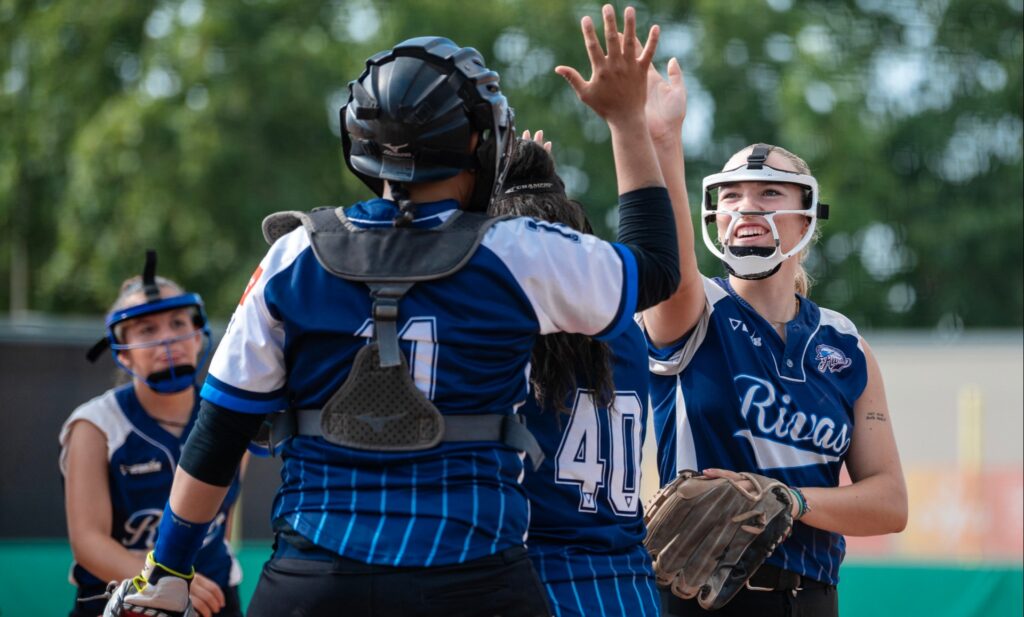
You have probably heard of béisbol (baseball). But have you ever watched or played sófbol?
Sófbol is one of the most played team sports in the world. Over 40 million people play it every summer in the United States alone. It is fast, exciting, and easier to learn than most bat-and-ball sports. The game is also more accessible because the field is smaller and the games are shorter.
In this guide, you will learn everything about sófbol — from its surprising origin story (hint: it started with a boxing glove) to the rules, positions, equipment, and tips for beginners. Whether you want to watch a game, join a team, or just impress your friends with your knowledge, this guide covers it all.
What Is Sófbol?
Sófbol is a bat-and-ball sport played between two teams of nine players each. The goal is simple: score more runs than the other team before the game ends.
It is a direct descendant of béisbol. But it has some key differences:
- The ball is larger — 12 inches (30.5 cm) in circumference
- The field is smaller
- The pitcher throws underhand, not overhand
- Games are 7 innings long (not 9)
- The pitching distance is shorter
The word “sófbol” comes directly from the English word “softball.” The name was officially coined in 1926 by Walter Hakanson, a YMCA official in Denver, Colorado.
Think of sófbol as baseball’s slightly smaller, faster-paced cousin. Same family, different personality.
The History of Sófbol: A Story That Started With a Boxing Glove
Here is a fact that will surprise you.
Sófbol was not invented as a sport. It was invented by accident on Thanksgiving Day, 1887, in Chicago.
A group of men had gathered at the Farragut Boat Club to hear the result of the Harvard vs. Yale football game. When the result came in (Yale won 17-8), an excited Yale fan threw a boxing glove at a Harvard supporter. The Harvard fan grabbed a gymnasium stick and swatted it back.
A reporter named George Hancock watched this and had an idea. He called out: “Let’s play baseball!” He tied the boxing glove strings together to make a ball. He drew bases on the floor with chalk. And just like that, the first game of indoor baseball was played.
The final score that night was 41-40. Not exactly a pitchers’ duel, but a legend was born.
Here is how sófbol developed from that messy first game:
- 1887 — George Hancock invents indoor baseball at the Farragut Boat Club, Chicago
- 1889 — Hancock publishes the first official rulebook with 19 rules
- 1895 — Lewis Rober Sr. takes the game outdoors for Minneapolis firefighters; it becomes known as “kitten ball”
- 1897 — First softball league outside the US forms in Toronto, Canada
- 1923 — A national rules committee is appointed to standardize the game
- 1926 — Walter Hakanson officially names the sport “softball”
- 1930 — The name “softball” spreads across all of the United States
- 1933 — The Amateur Softball Association (ASA) is founded; 70,000 people attend the first national tournament at the Chicago World’s Fair
- 1934 — Unified rules are published for the whole nation
- 1952 — The International Softball Federation (ISF) is formed
- 1996 — Women’s fast-pitch sófbol becomes an Olympic sport at the Atlanta Games
- 2013 — The World Baseball Softball Confederation (WBSC) becomes the highest governing body
- 2028 — Sófbol is set to return to the Olympic Games in Los Angeles
The sport has come a long way from a boxing glove and a gymnasium stick.
The Two Main Types of Sófbol
Not all sófbol is the same. You need to understand the two main types before you watch or play.
Fast-Pitch Sófbol
- The pitcher throws the ball as fast as possible, using an underhand windmill motion
- Top female fast-pitch pitchers can throw at speeds of 60-70 mph (96-112 km/h)
- 9 players per team on the field
- 9 innings per game (at competitive/professional level)
- Base stealing is allowed
- This is the Olympic version of the sport
- Women’s college softball in the US uses fast-pitch rules
Slow-Pitch Sófbol
- The pitcher lobs the ball in a high arc, usually 6 to 12 feet (1.8 to 3.7 meters) high
- 10 players per team on the field
- 7 innings per game
- Base stealing is NOT allowed
- This is the most common recreational version
- Easier to hit, which means more offense and higher scores
Most casual players and community leagues use slow-pitch. The Olympic-level action you see on TV is fast-pitch. Both versions use the same basic field, rules, and equipment.
Sófbol Rules: How the Game Works
Let’s walk through the core rules of sófbol step by step.
The Objective
- Score more runs than the opposing team
- A run scores when a player successfully touches all four bases (first, second, third, and home plate)
- The team with the most runs at the end of the game wins
Game Structure
- A standard game lasts 7 innings (slow-pitch) or 7-9 innings (fast-pitch)
- Each inning has two halves: the top (visiting team bats) and the bottom (home team bats)
- Each half-inning ends after three outs
How Outs Work
You get an out when:
- The batter swings and misses three times (strikeout)
- A fielder catches the ball in the air before it bounces
- The ball is thrown to first base before the batter reaches it
- A base runner is tagged with the ball while not on a base
How Scoring Works
- A batter hits the ball and reaches first base safely = batter becomes a base runner
- The base runner advances as teammates hit the ball
- When the base runner touches home plate = one run scored
- A home run (ball hit over the outfield fence) = the batter and all base runners score
Pitching Rules
This is where sófbol and béisbol are most different:
- All pitches must be thrown underhand
- The pitcher stands on a rubber plate (the “pitcher’s mound”)
- Pitching distance: 43 feet (13.1 m) for women’s fast-pitch; 46 feet (14 m) for men’s
- A legal pitch must cross the strike zone — roughly knee to shoulder height over home plate
Ball and Strike Count
- Ball — the pitch misses the strike zone and the batter does not swing
- Strike — the pitch crosses the strike zone, or the batter swings and misses
- Walk — 4 balls in a row = batter goes to first base for free
- Strikeout — 3 strikes = batter is out
- Foul ball — ball hit outside the baselines; counts as a strike unless the batter already has 2 strikes
Positions in Sófbol: Who Does What
A sófbol team has 9 players on the field at all times. Each player has a specific role.
Infield Positions
- Pitcher (P) — Throws the ball to the batter from the center of the diamond. Uses an underhand windmill motion. The most specialized position in the game.
- Catcher (C) — Crouches behind home plate. Receives pitches and controls the game. Wears full protective gear (mask, chest protector, shin guards).
- First Baseman (1B) — Covers first base. Most putouts in sófbol happen at first base. Must have good hands for catching throws.
- Second Baseman (2B) — Covers the area between first and second base. Often involved in double plays.
- Third Baseman (3B) — Covers third base. Must react fast because hard-hit balls come quickly.
- Shortstop (SS) — Covers the gap between second and third base. Often the best fielder on the team. High-traffic position.
Outfield Positions
- Left Fielder (LF) — Covers the left side of the outfield
- Center Fielder (CF) — Covers the middle of the outfield; usually the fastest outfielder
- Right Fielder (RF) — Covers the right side of the outfield
In slow-pitch, teams add a 10th player called the extra outfielder or “rover” who helps cover the expanded outfield.
Sófbol Equipment: What You Need to Play
You do not need much to start playing sófbol. Here is the complete list:
Required Equipment for All Players
- Softball bat — Round bat, not more than 34 inches (86.4 cm) long, max 2.25 inches (5.7 cm) in diameter. Made from wood, aluminum, or composite materials.
- Softball — 12 inches (30.5 cm) in circumference for standard play; 11 inches for some women’s leagues. Despite the name, the ball is not actually soft.
- Cleats — Shoes with rubber or metal spikes for grip on the grass/dirt field
- Batting gloves — Improve grip and protect hands while hitting (optional but popular)
- Batting helmet — Required when batting; protects from wild pitches
Equipment for Defensive Players
- Fielding glove — Large leather glove that helps catch the ball. Size and shape vary by position. Catchers use a special “mitt” with extra padding.
Catcher-Specific Equipment
- Face mask
- Chest protector
- Leg/shin guards
- Catcher’s mitt
Umpire
A sófbol game uses 1 to 7 umpires. Most games use 2 umpires: one behind home plate and one on the bases. Umpires use hand signals and vocal calls to make decisions.
Sófbol vs. Béisbol: Key Differences Side by Side
Many people confuse sófbol and béisbol. Here is a clear comparison:
| Feature | Sófbol | Béisbol |
|---|---|---|
| Ball size | 12 inches (30.5 cm) | 9 inches (22.9 cm) |
| Pitching style | Underhand | Overhand / sidearm |
| Pitching distance | 43-46 feet (13-14 m) | 60.5 feet (18.4 m) |
| Base path length | 60 feet (18.3 m) | 90 feet (27.4 m) |
| Game length | 7 innings | 9 innings |
| Field size | Smaller | Larger |
| Base stealing | Allowed (fast-pitch) / Not allowed (slow-pitch) | Always allowed |
The smaller field and shorter game make sófbol faster and more accessible, especially for beginners and recreational players.
How to Choose the Right Sófbol League for You
Thinking about joining a league? Here is how to pick the right one:
Step 1: Know Your Level
- Beginner — Start with recreational slow-pitch leagues. They are relaxed, social, and forgiving for new players.
- Intermediate — Look for organized church leagues, company leagues, or community association leagues.
- Advanced/Competitive — Try fast-pitch leagues or ASA/USA Softball sanctioned tournaments.
Step 2: Choose the Right Format
- Slow-pitch — Best for adults, recreational play, and mixed-gender leagues
- Fast-pitch — Best for serious competitors, high school athletes, college-bound players
- 16-inch sófbol — A Chicago tradition; larger ball, no gloves, very physical
Step 3: Check These Criteria
- Age divisions (under-12, under-18, adult, seniors 35+, seniors 50+)
- Gender divisions (women’s, men’s, co-ed/mixed)
- Day and time of games (weekday evenings vs. weekends)
- Cost of registration, uniforms, and equipment
- Distance from your home to the field
Step 4: Contact These Organizations
- USA Softball (usasoftball.com) — for US players
- World Baseball Softball Confederation (wbsc.org) — for international players
- Your local parks and recreation department — usually the fastest way to find a local league
Best Practices for Beginner Sófbol Players
You do not need to be an athlete to enjoy sófbol. But a few habits will make you better fast.
Batting Tips
- Keep your eyes on the ball from the moment it leaves the pitcher’s hand
- Stand with your feet shoulder-width apart and knees slightly bent
- Grip the bat with your fingers, not your palms
- Step toward the pitcher as you swing (this adds power)
- Follow through — do not stop the swing when you hit the ball
- Practice your swing with a batting tee before facing live pitching
Fielding Tips
- Always stay in an athletic stance — bent knees, weight on the balls of your feet
- Watch the batter, not just the ball, to predict where the ball will go
- Catch with two hands whenever possible for better security
- Communicate loudly with teammates — call “I got it!” to avoid collisions
- Back up your teammates even if the ball is not coming to you
Pitching Tips (Fast-Pitch)
- Master the grip before worrying about speed
- Focus on releasing the ball at the hip for a legal underhand pitch
- Practice the “K zone” — aim for the corners of the strike zone
- Add spin variations (rise ball, drop ball, curveball) only after you master the basic fastball
- Work on your stamina — pitchers can throw hundreds of pitches per game
Baserunning Tips
- Run hard to first base on every ground ball — you never know what will happen
- Know the count (balls and strikes) before each pitch
- Watch the third base coach for signals on whether to run or stop
- Slide into bases when a play is close — but learn proper sliding technique first to avoid injury
How Sófbol Became an Olympic Sport (and Left, and Came Back)
The Olympic journey of sófbol is a drama worthy of its own movie.
- 1991 — The International Olympic Committee votes to include women’s fast-pitch softball at the 1996 Olympics
- 1996 — USA wins gold at Atlanta. The sport captures global attention.
- 2000 — USA wins gold again in Sydney
- 2004 — USA wins gold in Athens. Jennie Finch and Cat Osterman become global stars.
- 2008 — USA wins silver in Beijing (lost to Japan in the final)
- 2005 — The IOC shockingly votes to drop both softball and baseball from the 2012 Olympics
- 2020 — Softball and baseball return to the Tokyo Olympics (held in 2021 due to COVID-19). Japan wins gold on home soil.
- 2024 — Sófbol is NOT at the Paris Olympics
- 2028 — Sófbol is confirmed for the Los Angeles Olympics. The sport comes home.
This history shows that sófbol is serious international business. The WBSC now governs the sport in over 110 countries. Women’s fast-pitch sófbol is one of the most competitive team sports at the international level.
Common Sófbol Mistakes and How to Fix Them
Even experienced players make these errors. Watch for them in your own game.
Mistake 1: Dropping Your Head While Batting
- Problem: You look down to see where the ball will land instead of keeping your eye on the ball
- Fix: Focus on the ball until you hear the “crack” of contact
Mistake 2: Wrong Glove Position When Fielding
- Problem: Catching with one hand or pointing the glove the wrong direction
- Fix: For balls above the waist, fingers point up. For balls below the waist, fingers point down.
Mistake 3: Overrunning Bases
- Problem: Running past second or third base when you should stop
- Fix: Watch your base coach at all times. They tell you when to stop.
Mistake 4: Pitching With an Illegal Motion
- Problem: Stepping to the side instead of forward, or releasing the ball from above the hip
- Fix: Film your pitching motion and compare it to legal delivery guidelines from USA Softball
Mistake 5: Not Communicating in the Outfield
- Problem: Two outfielders collide going for the same ball
- Fix: The center fielder always has priority. Everyone else calls “you got it!” to clear the way.
Sófbol Around the World
Sófbol is not just an American sport. Here is how it looks globally:
- United States — Softball is the No. 1 team participant sport. Over 40 million Americans play each summer.
- Japan — One of the strongest softball nations in the world. Won Olympic gold in Tokyo 2020.
- Canada — Has played softball since 1897. Strong national programs for both men and women.
- Australia — Powerhouse women’s team known as the “Aussie Spirit”
- Mexico and Latin America — Sófbol is deeply popular in Mexico, Venezuela, Puerto Rico, and the Dominican Republic. The word “sófbol” itself is the Spanish-language name used across Latin America.
- Europe — Netherlands, Italy, and the Czech Republic have strong softball traditions
- World governing body — The WBSC organizes Men’s, Women’s, and Mixed World Championships
In Spanish-speaking countries, you will see the sport written as “sófbol” — with an accent mark on the “o” following Spanish phonetic rules. It is the same sport, same rules, same passion. Just a different language.
Health Benefits of Playing Sófbol
Sófbol is not just fun. It is also good for your body and mind.
Physical Benefits
- Builds cardiovascular endurance through running the bases and chasing balls in the field
- Strengthens the arms, shoulders, and core through throwing, batting, and pitching
- Improves hand-eye coordination — hitting a softball is one of the hardest skills in all of sports
- Increases leg strength and agility through explosive movements like sliding, diving, and sprinting
- Burns significant calories — a recreational game can burn 300-500 calories per hour
Mental and Social Benefits
- Develops strategic thinking — every pitch is a decision, every at-bat is a mini chess match
- Builds teamwork and communication skills
- Reduces stress through physical activity and social connection
- Teaches young players about discipline, sportsmanship, and resilience
- Creates community — community softball leagues are some of the most socially active groups in any town
For players interested in other sports and outdoor activities, you might also enjoy reading about clearing vegetation to maintain your own practice field or backyard space.
Maintenance and Troubleshooting: Caring for Your Sófbol Gear
Your equipment is your investment. Take care of it and it lasts for years.
Bat Care
- Clean your bat with a damp cloth after every use
- Store bats indoors — extreme temperatures warp aluminum and composite materials
- Composite bats need a “break-in” period of 150-200 hits before they reach peak performance
- Rotate the bat a quarter-turn on each hit during break-in to distribute wear evenly
- Never hit rocks, dirt, or anything other than balls with your bat
Glove Care
- Break in a new glove by working glove oil or conditioner into the leather
- Form the pocket early by placing a ball inside and tying the glove closed overnight
- Keep gloves out of rain and away from direct sunlight when not in use
- Re-lace frayed or broken laces immediately — a broken lace in a game can cost you
Ball Storage
- Store softballs in a cool, dry space
- Balls left in a hot car or direct sun for long periods lose their shape
- Replace game balls that show cracking, peeling, or significant deformation
Cleats
- Clean mud from cleats after every game to prevent hardening
- Check metal cleats for bent or missing spikes before each game
- Replace worn rubber cleats when tread is smooth — worn cleats cause slipping
FAQs About Sófbol
What is the difference between sófbol and béisbol?
Sófbol uses a larger, softer ball (12 inches vs. 9 inches), a smaller field, underhand pitching, and 7-inning games instead of 9. The field dimensions are also smaller — bases are 60 feet apart in sófbol versus 90 feet in béisbol. Both sports use similar batting and fielding strategies, but the feel of the game is noticeably different due to the pitching style and field size.
Is sófbol a hard sport to learn?
Sófbol is one of the more beginner-friendly bat-and-ball sports. The underhand pitching is easier to track and hit than overhand baseball pitching. The smaller field means fewer large gaps to cover. Most people can get the basics within a few sessions. Fast-pitch at the competitive level is very challenging, but slow-pitch recreational leagues welcome complete beginners.
How many players are on a sófbol team?
A standard sófbol team has 9 players on the field at a time. In slow-pitch, teams use 10 players. Rosters can be larger — most competitive teams carry 12-15 players to allow for substitutions.
Is sófbol an Olympic sport?
Women’s fast-pitch sófbol was an Olympic sport from 1996 to 2008. It was removed from the 2012 and 2016 Olympics but returned for the Tokyo 2020 Games. It is not in the 2024 Paris Olympics but will return for the 2028 Los Angeles Olympics.
What is the best age to start playing sófbol?
Children can start playing sófbol as young as 6 years old using tee-ball versions of the game. Competitive youth leagues typically start at under-10 and under-12 levels. Adults of any age can join recreational leagues — many towns have senior leagues for players over 50 and even over 65.
What does “sófbol” mean in Spanish?
“Sófbol” is simply the Spanish phonetic spelling of the English word “softball.” The accent mark on the “o” follows standard Spanish pronunciation rules. The sport is known as sófbol throughout Latin America and Spain, where it has become increasingly popular.
The Bottom Line
Sófbol is a sport with a bigger story than most people know. It started on a Thanksgiving evening with a boxing glove and a broomstick. Today it is played by tens of millions of people across more than 110 countries.
Whether you want to join a casual slow-pitch league on the weekends, cheer for your national team at the 2028 Olympics, or simply understand what your kids are playing on the school field — this guide gives you everything you need. Sófbol is accessible, social, exciting, and deeply rewarding. The only thing left to do is grab a bat and give it a try.
Did you learn something new today? Drop a comment below and tell us — are you a sófbol veteran or a complete beginner? We want to hear your story.

Shahid Maqsood is an Editor and Content Strategist with 5 years of experience in digital media and content publishing. He holds an MBA and a Master’s degree in Mass Communications, combining business insight with editorial expertise. Shahid specializes in biography writing, technology, and business news — crafting content that is accurate, well-researched, and reader-first. He currently leads editorial strategy at Dot Daily, ensuring every story meets the highest standards of clarity and credibility. Connect on LinkedIn