

You pull a Pokémon card from a pack, and your first thought is: “That looks cool.” Your second thought? “Wait, what does that tiny star in the corner mean?”
Don’t worry. You’re not alone. Pokémon cards are packed with symbols — and unless you grew up playing the TCG, it can feel like reading a foreign language with extra steps. This guide breaks every single symbol down in plain English, with no jargon and no nonsense.
Whether you’re a parent sorting your kid’s birthday haul, a collector trying to spot value, or just someone who found a 90s card in a shoebox — this is the guide for you.
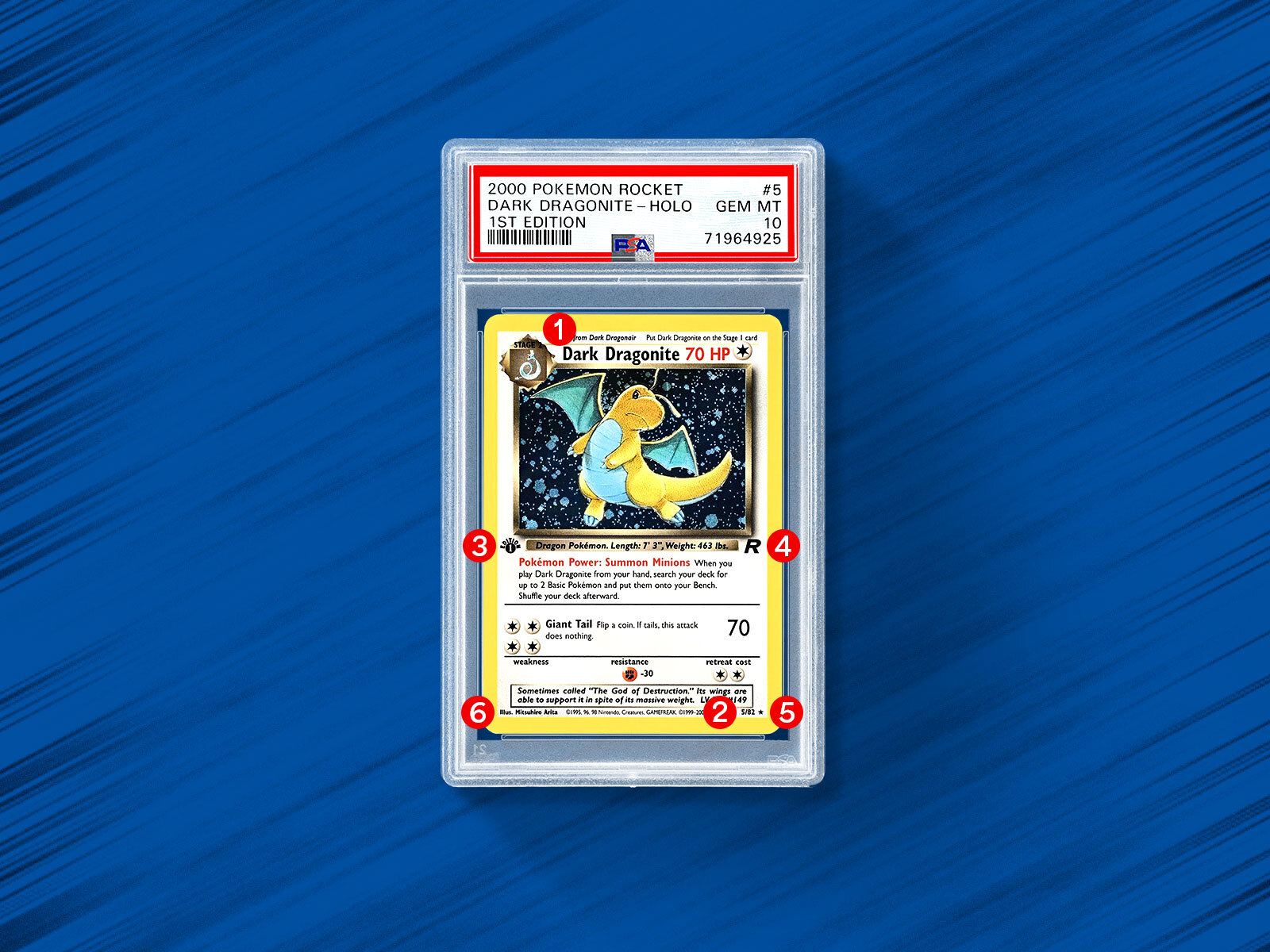
Rarity Symbols: The Most Important Symbols on the Card
Found in the bottom-left (or bottom-right) corner, the rarity symbol is the first thing a collector checks. According to CGC Cards, which has graded over 3 million Pokémon cards, every card carries one of these symbols to indicate how frequently it appears in booster packs.
The original four symbols have been around since 1999. They’re beautifully simple — and honestly still the most useful thing to know.
- ⚫ Circle Common — The most frequently found cards. You’ll pull these constantly. Great for building decks, not so great for impressing collectors.
- ◆ Diamond Uncommon — A step up. Less common than circles, but still fairly easy to find. Usually one or two per pack.
- ★ Star Rare — The traditional rare slot. Can be holo (shiny artwork) or non-holo. Every booster pack typically contains one.
- ★ PROMO Promo — A black star with “PROMO” printed on it. These aren’t pulled from packs — they’re given out at events, as box toppers, or tied to movie releases.
The New Rarity Symbols (Scarlet & Violet, 2023 Onwards)
Here’s where things got a proper upgrade. For years, one black star had to cover everything from a basic holo to a jaw-dropping full-art card. Collectors were confused. Fan-made rarity terms were everywhere. So, The Pokémon Company officially overhauled the system in 2023 with five new symbols.
Two black stars. Used for standard Pokémon ex with regular artwork.
Cards with especially stunning, full-bleed artwork. Same power level, but gorgeous.
Full Art cards — the artwork stretches across the entire card face.
Full-bleed art + higher pull rarity. A collector’s dream. Often the chase cards of a set.
Three golden stars. Gold-textured cards — trainer full arts and golden Pokémon ex.
Source: TCG Protectors · Pokemon.com (official)
What About Secret Rares?
Secret Rares are a special case. They don’t have their own dedicated symbol — you spot them a different way. According to Wargamer, a Secret Rare has a collector number higher than the official set total. For example, if a set has 197 cards and your card reads 212/197 — congratulations, that’s a Secret Rare.
They’re secret by design. It keeps things exciting, and occasionally they’re worth a lot of money.
Energy Type Symbols: The Fuel Behind Every Attack
See those colourful icons on attack costs, next to a Pokémon’s name, and on Energy cards themselves? Those are energy type symbols. They’re the backbone of how the TCG works.
As Dexerto explains, the TCG uses 11 energy types — fewer than the 18 types in the main video games, but perfectly balanced for card gameplay.
| Symbol Colour | Energy Type | Common Pokémon |
|---|---|---|
| 🔴 Red / Orange | Fire | Charizard, Arcanine, Cinderace |
| 🔵 Blue | Water | Blastoise, Gyarados, Vaporeon |
| 🟢 Green | Grass | Venusaur, Sceptile, Decidueye |
| ⚡ Yellow | Lightning | Pikachu, Raichu, Jolteon |
| 🟣 Purple | Psychic | Mewtwo, Alakazam, Gardevoir |
| 🥊 Brown / Tan | Fighting | Machamp, Lucario, Hitmonlee |
| 💀 Dark Purple | Darkness | Umbreon, Darkrai, Weavile |
| 🔩 Silver | Metal | Metagross, Steelix, Aggron |
| 🐲 Teal / Dragon | Dragon | Dragonite, Rayquaza, Garchomp |
| ⭐ White / Clear | Colorless | Snorlax, Eevee, Pidgeot |
| 💗 Pink | Fairy (retired) | Togekiss, Clefable (older sets) |
Source: Dexerto · Sidequest TCG
The colourless (white star) symbol is the most flexible — it means any energy type can fill that cost. It’s the wildcard of the TCG. Every deck loves it.
Set Symbols: Where Did This Card Come From?
Every Pokémon card belongs to a specific expansion set. The small icon in the bottom-left corner — often a stylised logo or shape — tells you exactly which one. TCG Protectors describes it as the “expansion set identifier,” sitting alongside the card number.
Why does this matter? A few reasons. First, set symbols tell you when a card is legal in tournament play. Second, certain sets are more collectible than others (Base Set from 1999, anyone?). Third, if you’re buying or selling cards, the set symbol narrows down value significantly.
Since Scarlet & Violet, set symbols have become even more standardised. Pre-Scarlet & Violet cards used distinct artistic logos per set. Post-2023 sets use a cleaner identifier system alongside a regulation mark letter.
Gameplay Symbols: What Actually Happens in Battle
HP (Hit Points)
Those big numbers in the top-right corner of a Pokémon card represent HP — Hit Points. It’s the Pokémon’s health. When damage counters on the card reach that number, the Pokémon is knocked out and your opponent takes a Prize card.
Modern Pokémon ex cards can have HP values north of 300. Back in 1999, the highest was Chansey at 120. The power creep is real, and it’s dramatic.
Weakness and Resistance
Found beneath the attacks section, these two symbols tell you a Pokémon’s vulnerability and defences against specific types.
Weakness (×2): If your Pokémon has a Fire weakness (shown as a flame symbol × 2), it takes double damage from Fire-type attacks. In competitive play, this single symbol can decide an entire game.
Resistance (−30): Shown with a minus number, resistance reduces incoming damage from that type. Currently, most cards only list weakness — resistance has become rarer in modern sets.
Retreat Cost
At the bottom of the card, colourless energy symbols represent how many Energy cards you must discard to move a Pokémon from your Active position to the Bench. MyDexTCG notes that high retreat costs make a Pokémon harder to switch out — so you want to use them strategically rather than on a whim.
Some cards have zero retreat cost (shown as a blank or “0”). Those are golden in any deck build.
Regulation Mark
A small letter — usually found near the card number — indicates which format the card is legal in. As Dexerto explains, the letter “G” (and newer letters) indicates tournament-legal Standard format status. When a new series launches, older regulation marks rotate out of Standard play.
If you’re building a competitive deck, this little letter matters a lot. Collectors don’t need to worry about it — but players absolutely do.
Special Stamps: The Rarest Symbols of All
Some Pokémon cards carry additional stamps that aren’t part of the standard symbol set. These are the hidden gems that make certain cards genuinely special — and often more valuable.
STAFF stamp: Given to event staff at official tournaments. According to Dexerto, STAFF stamps were introduced in 2007 and discontinued after Vivid Voltage in 2020. They add collector value.
Play! Pokémon stamp: Awarded to league competitors and event participants from 2010 onwards. If you earned one, you earned it the hard way.
Professor stamp: Handed out at Pokémon Professor Cups. The 2022 Stuttgart cup gave top-8 finishers a “Friends in Galar” card with a Professor stamp — and the winner got a Champion stamp on top. These are genuinely scarce.
Anniversary stamps: Issued for milestone anniversaries like the 25th. Some are worth notable amounts; others are more sentimental than financial.
Pokémon Card Types: V, ex, VMAX and More
Beyond rarity and energy, the suffix or prefix on a Pokémon’s name carries its own meaning. These aren’t decorative — they change the rules of how the card plays.
Pokémon ex (original era, 2003–2007 and reintroduced 2023): More powerful than standard Pokémon, but your opponent takes two Prize cards when they knock it out. High risk, high reward.
Pokémon V and VMAX (Sword & Shield era): As CGC Cards explains, Pokémon V are basic Pokémon with boosted stats. VMAX evolve from V cards and boast dramatically higher HP. Some VMAX cards have HP over 330.
Pokémon VSTAR: Introduced in Brilliant Stars (2022), VSTAR cards come with a one-use VSTAR Power — either an attack or ability that can only be used once per game. They’re powerful, but that limitation keeps things interesting.
Tera Pokémon ex (Scarlet & Violet): A new twist — Terastallized Pokémon ex don’t take damage while sitting on the Bench. If you’ve played the video games, you’ll recognise the concept immediately.
Quick Questions, Quick Answers
What does a circle symbol mean on a Pokémon card?
A circle means the card is Common — the most frequently pulled rarity from booster packs. Great for filling out a deck, not particularly valuable to collectors.
What’s the rarest symbol on a Pokémon card?
Three golden stars (Hyper Rare) is currently the highest official rarity symbol in the Scarlet & Violet era. But Secret Rares — identifiable by a collector number higher than the set total — are often even harder to pull.
What does the letter on a Pokémon card mean?
The regulation mark (a letter like G, H, etc.) shows whether a card is legal in Standard tournament play. New formats rotate older letters out, which is why tracking it matters for competitive players.
Do the symbols change between old and new cards?
The core four rarity symbols (circle, diamond, star, promo star) have stayed the same since 1999. The Scarlet & Violet expansion in 2023 added five new ones to better reflect the wider range of rare card types.
How do I know if my card is valuable?
Check the rarity symbol, the card number (Secret Rares exceed the set total), whether it has a holo treatment, and the card’s condition. Graded cards from CGC or PSA give the most accurate value indication.
Final Thoughts
Pokémon cards are deceptively simple on the surface. But once you know what each symbol means, you start seeing them differently. That little circle in the corner? That’s a common. That gold-textured card with three stars? That’s a Hyper Rare — and it might be worth more than you expect.
The beauty of the Pokémon TCG is that every symbol serves a purpose. Nothing is random. Whether you’re playing competitively, collecting seriously, or just admiring the art — understanding the symbols turns a pile of cardboard into a language you can read fluently.
And once you speak the language, every pack opening becomes a whole lot more interesting.
Sources used in this article:
The Pokémon Company (official announcement) ·
CGC Cards ·
Wargamer ·
Dexerto ·
TCG Protectors ·
Sidequest TCG

Shahid Maqsood is an Editor and Content Strategist with 5 years of experience in digital media and content publishing. He holds an MBA and a Master’s degree in Mass Communications, combining business insight with editorial expertise. Shahid specializes in biography writing, technology, and business news — crafting content that is accurate, well-researched, and reader-first. He currently leads editorial strategy at Dot Daily, ensuring every story meets the highest standards of clarity and credibility. Connect on LinkedIn